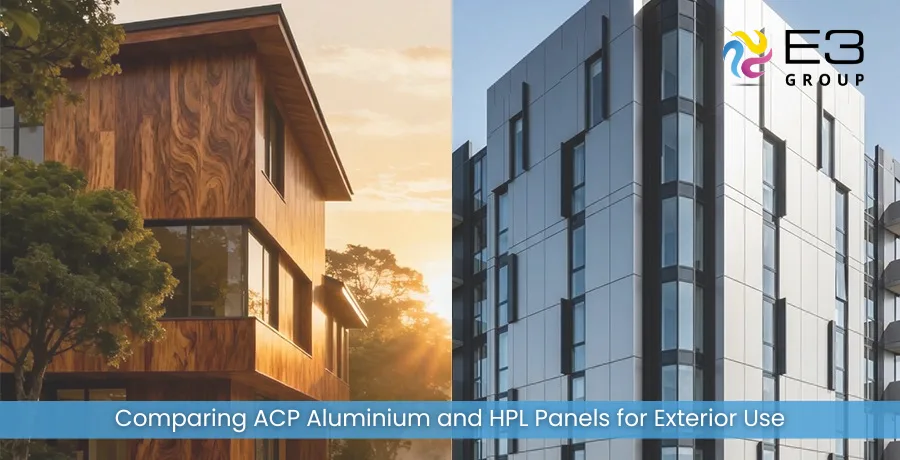
While designing a modern building, the selection of the exterior cladding can be a make-or-break factor. Today, two popular choices are ACP Aluminium panels and HPL panels.
But which among these really fits the bill? Both materials have different advantages, ranging from strength and aesthetics, and it’s important to be aware of their contrasts before you make a purchase. Although Aluminium panels are light in weight, weatherproof, and offer glossy, metallic finishing, HPL is recognized by its tough textures, color options, and green attributes.
Let’s see how each one of them can be a game changer for your facades!
What are ACP Aluminium Sheets?
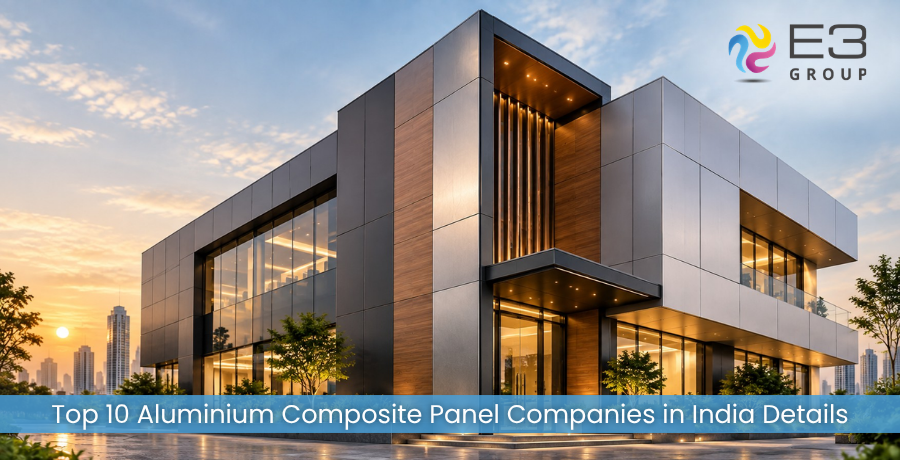
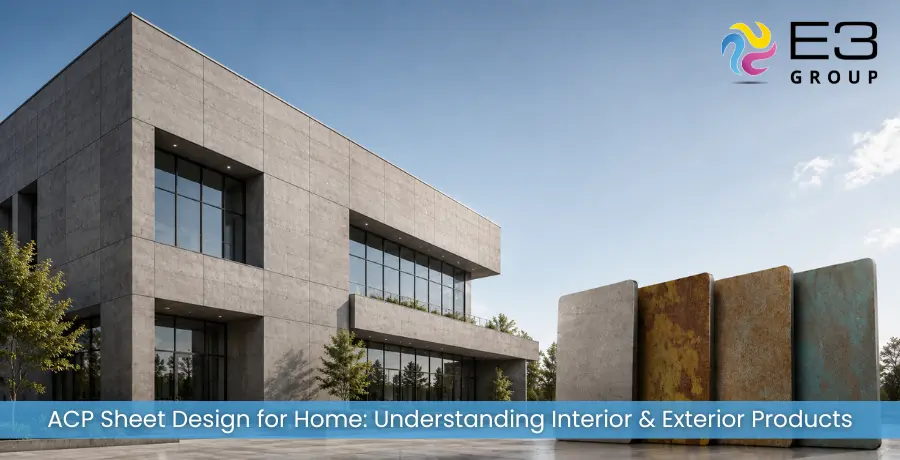
Aluminum composite sheet is a modern building material designed for both functional and aesthetic purposes. It consists of two thin layers of aluminum bonded to a non-aluminum core, forming a highly durable and lightweight panel aluminium composite. This unique structure ensures high resistance to weather conditions, making it ideal for exterior facades, partitions, and interior décor applications.
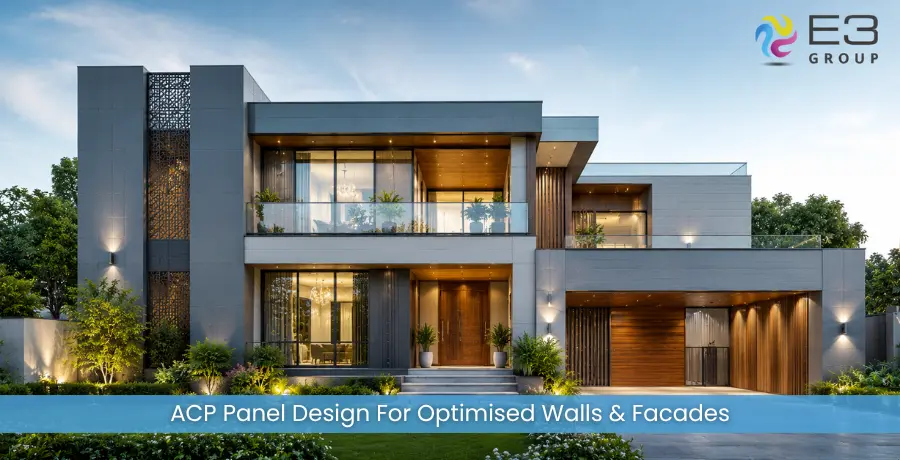
The versatility of ACP is very hard to match. You get them in a variety of colours, finishes, and textures, ranging from metallic sheens to wood patterns, architects and designers can give shape to their creative imagination. Its lightweight and easy fixing make ACP sheet panel a popular choice in both residential and professional work.
Popular uses are ACP partition sheets in interiors, external building facades, signage, and decorative panels. Its strength, fire resistance, and glossy finishes make it a durable and classy choice in modern architecture.
Introduction to HPL Panels
The High-Pressure Laminate (HPL) panels are yet another popular choice as exterior and interior cladding. With their characteristic bright hues, durable textures, and green credentials, HPL panels combine aesthetic value and practical value. These are most versatile and find application in residential exterior, commercial facades, and interior partitions.
ACP Aluminium panels come with metallic finishes and lightweight strength. HPL panels, on the other hand, are rich textures. It is also an option for the environment. Both materials are designed for decorating facades. That is why, choosing the right one depends on the specific design, location, and functional requirements.
ACP Aluminium vs HPL Panels: Comparison
Longevity
ACP panels are designed to endure rough weather conditions, such as rain, UV, and changes in temperature. Their aluminium finish does not corrode, giving lasting beauty and strength. The HPL panels are also robust, scratch-resistant, and retain their finishing in the long run, and are thus ideal for busy zones.
Maintenance
Both ACP and HPL panels are low maintenance. ACP requires less cleaning and maintains its lustre for decades, and it is also possible to clean HPL panels easily by mild solutions without hampering their finish.
Aesthetic
They present slim metallic appearances and glossy sheens, ideal for contemporary facades. HPL panels offer a broad range of textures and hues, giving scope for design flexibility.
Price
ACP Aluminium panels are lightweight and very easy & fast to install. This feature saves labour and structural expenses. HPL panels are a bit heavier and also offer a cost-effective solution depending on the scale and complexity of the project.
Sustainability
Both are environmentally friendly options. The ACP can be reused, and its long lifespan minimizes material disposal. The HPL panels are produced in an environmentally friendly way, thus ensuring responsible use in contemporary buildings.
Uses of ACP Aluminium Panels
ACP aluminums are increasingly being utilized in numerous building applications. They are most appropriate in:
● Residential buildings: Improving facade look by applying metallic finishes.
● Shopping centers: Long-lasting and fashionable mall and office facade claddings.
● Institutional work: Hospitals, schools, and government institutions.
● Interior partitions: Employing ACP partition sheet in case of modular walls and design features.
The flexibility and versatility in finish of ACP panel sheet allow architects and designers to implement innovative and creative designs with functionality and endurance.
Pros and Cons of ACP Aluminium Panels
Pros
● Light weight and simple fixing
● Long-wearing and water-resistant
● Fire-resistant and secure
● Sleek metallic and aesthetic finishes
● Versatile in both external and internal applications
● Easy maintenance
● Comes in assorted colors, textures, and designs
● Recyclable
Cons
● Requires professional installation for peak usage
● Design and finish choice can influence cost per project
● Efficacious working depends on the quality of ACP sheet panels used
Pros and Cons of HPL Panels
Pros
● Plush texture and vivid colors
● Very flexible both in external and internal applications
● Green and durable material
● Long lasting and shock and scuff proof
● Easy maintenance
● Permits architects and designers creative freedom
Cons
● Relatively heavier than ACP Aluminium
● Design selection can affect installation approach
● Performance is reliant on quality of HPL panel
How to Select the Perfect Panel to Your Project
The selection of the panel depends on the particular requirements in your building work. When you require slender, contemporary-looking facades with light-weight fixing and metallic finishes, ACP Aluminium is ideal. When textured appearances, environmental friendliness, and intense coloration are considered, HPL panels are a good choice.
At E3, we offer both E3 ACP and E3 HPL, providing superior materials that fit every architectural need. With a variety of finishing and durable panels, E3 solutions allow designers and builders to achieve form as well as function. E3’s surface solutions got you covered with the hand that gets you dependability and lasting power for your project.
Points to Remember
ACP Aluminium and HPL panels both offer distinctive strengths in modern architecture. ACP panels are light in weight, weather proof, and ideal for streamlined finishes, while HPL panels come with luxurious textures, green attributes, and aesthetic design versatility.
The choice of panel solely depends on the need of a project, looks, and uses. Owing to E3’s big product range, architects and contractors are now capable of getting aesthetically better, durable, and reliable finish.