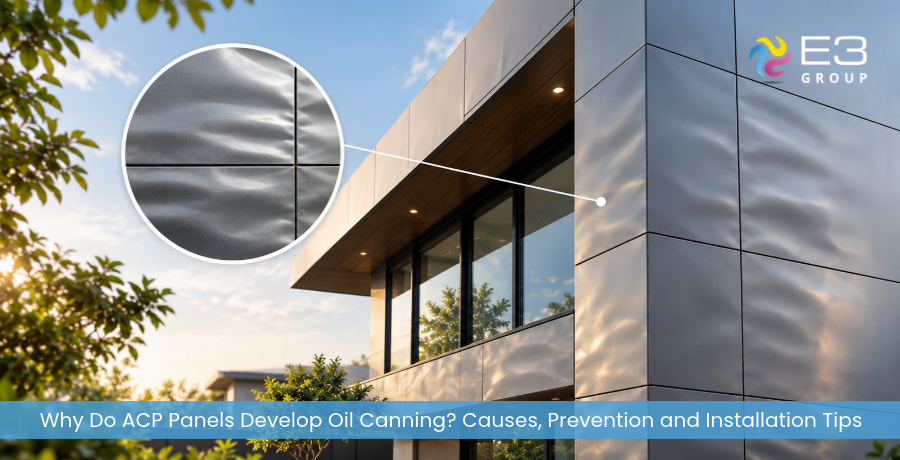
Aluminium Composite Panels are widely used in modern architecture for their sleek appearance, versatility and durability. However, an issue known as ACP panel oil canning can sometimes affect the visual appeal of building facades.
It usually occurs when subtle waves, ripples or uneven reflections appear across an otherwise flat panel surface. The most common contributing factors include thermal expansion, residual material stress, improper fastening, uneven support structures and unsuitable installation practices.
The complete understanding of the causes of oil canning in aluminium composite panels helps architects, contractors and fabricators minimise visible distortion. With careful material selection, correct panel design and professional installation, buildings can maintain a cleaner, more consistent exterior finish.
What Is ACP Panel Oil Canning?
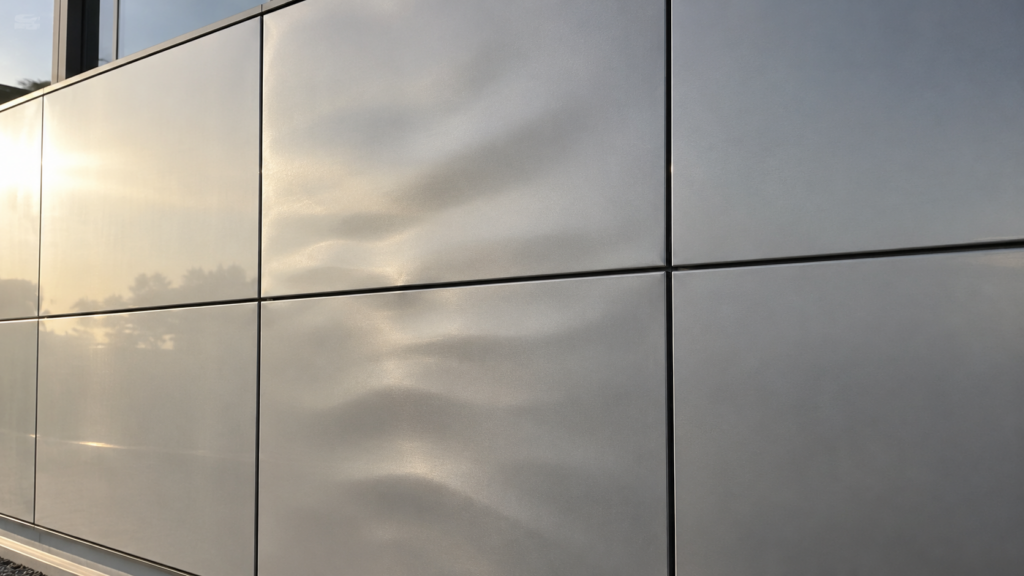
ACP panel oil canning is just a distortion across the flat surface of aluminium composite panels. Instead of appearing uniformly smooth, the panel may develop shallow ripples that become noticeable under direct sunlight or reflected light.
This distortion does not necessarily indicate permanent damage. It is generally an aesthetic concern rather than a structural failure, although significant distortion should always be investigated.
The extent of ACP sheet surface waviness depends on several factors, including panel dimensions, material properties, installation conditions and temperature variations.
What Causes Oil Canning:
1. Thermal Expansion & Temperature Changes
Aluminium naturally expands when heated and contracts when cooled. Exterior ACP panels experience continuous temperature fluctuations due to sunlight, weather and seasonal changes. Careless installation causes visible distortion. Dark-coloured panels exposed to intense sunlight may experience greater temperature changes.
2. Improper Fastening and Excessive Tightening
Incorrect fastening is one of the common ACP panel installation problems. When screws, rivets or other fixing components restrict natural panel movement, stress can accumulate across the aluminium surface. Excessively tight fasteners can also create localised distortion. Following recommended fastening methods, fixing distances and movement allowances helps maintain ACP panel flatness.
3. Uneven Supporting Framework
The supporting framework plays a crucial role in achieving a visually smooth facade. If the aluminium or galvanised iron sub-frame is uneven, poorly aligned or incorrectly positioned, installed panels may be forced to follow the irregular surface. This can create noticeable waves even when the panels themselves are manufactured within specified tolerances. Accurate levelling is therefore essential during installation.
4. Material Stress and Fabrication Errors
Aluminium sheets may contain residual stresses introduced during rolling, cutting, routing or forming. These stresses can become visible after fabrication or installation, particularly when the panel is restrained. Improper handling during transportation or fabrication can also contribute to aluminium composite panel defects. Careful material processing and appropriate fabrication techniques help minimise these risks.
5. Large Panels & Inadequate Support
Large ACP sheets create a seamless architectural appearance, but broad, unsupported sections may be more susceptible to visible waviness. Panel dimensions, aluminium skin thickness, overall panel stiffness and support spacing influence how the facade responds to stress. Selecting suitable panel specifications and designing adequate support systems can help reduce ACP sheet surface waviness.
How Can ACP Panel Oil Canning Be Prevented?
Although complete elimination cannot be guaranteed in every application, appropriate design and installation practices can significantly reduce the likelihood of oil canning.
Choose Suitable ACP Panel Specifications
Selecting panels according to project requirements is an important first step. Architects and contractors should evaluate panel thickness, aluminium skin thickness, dimensions, stiffness and the intended application. Larger panels may require additional design consideration to maintain acceptable ACP panel flatness under varying environmental conditions.
Maintain Accurate Framework Alignment
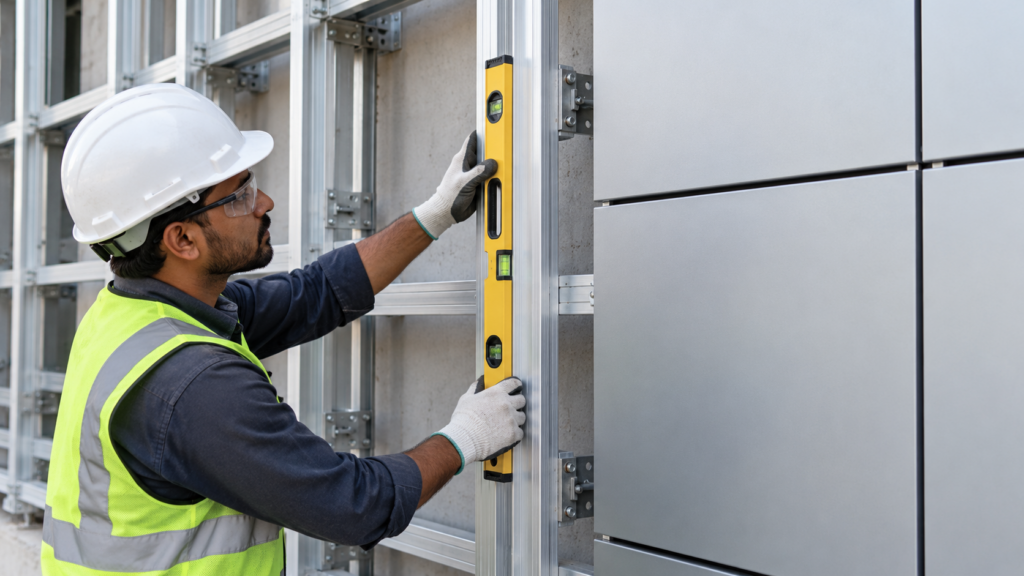
Before installing the panels, inspect the supporting framework carefully.
Main check points are:
- Hire certified workforce.
- Check for proper balance.
- Consider design limits.
Allow Adequate Thermal Movement
Proper expansion allowances are essential for successful ACP facade installation.
Panel joints, fixing details and edge clearances should accommodate expected temperature-related movement.
Rigidly restraining an entire panel can increase internal stress, particularly in locations exposed to direct sunlight.
Expansion details must follow the ACP sheet manufacturer’s technical guidance and the approved project design.
Follow Correct Handling and Fabrication Practices
ACP sheets should be stored on appropriate supports and protected against unnecessary bending, impact and twisting.
During fabrication, use suitable cutting and routing equipment to achieve clean, accurate edges.
Avoid forcing incorrectly sized panels into position, as this may introduce unwanted stress.
Inspecting panels before installation can also help identify visible aluminium composite panel defects before they become part of the finished facade.
Which Installation Tips Help?
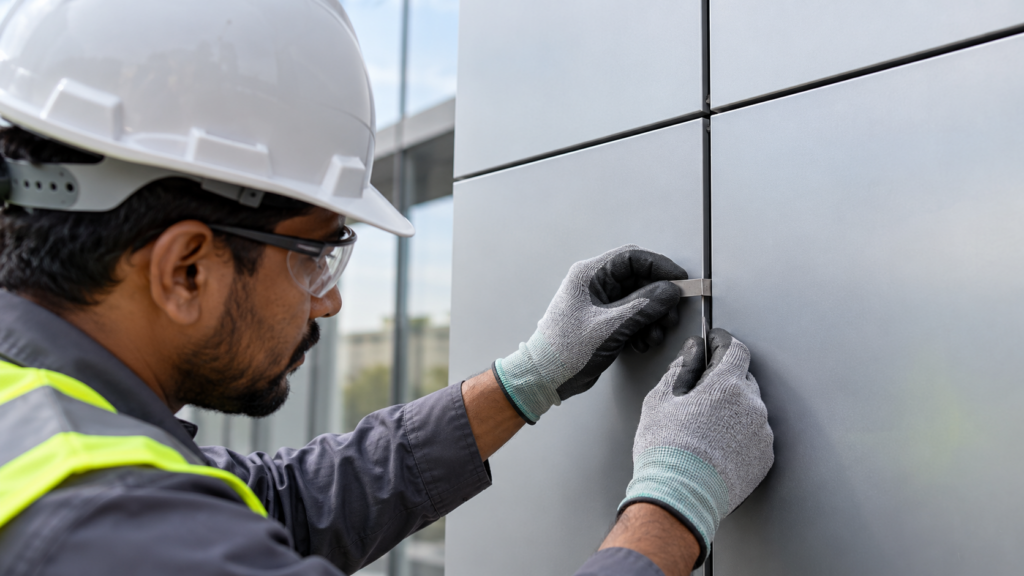
Successful installation requires attention to detail at every stage, from initial measurements to final inspection.
The following practices help reduce common ACP panel installation problems:
- Inspect panels before installation
- Manage necessary support
- Follow standard procedure
- Keep installation pressure aside
- Conduct a final visual inspection
- Look for appropriate joint spacing
Can Oil Canning Be Fixed After ACP Installation?
The exact solution depends on what is causing the distortion. If ACP panel oil canning results from installation-related stress, correcting restricted fixing points or misaligned supports may reduce the visible effect. However, panels affected by permanent deformation or fabrication damage may require replacement.
Before taking corrective action, contractors should identify whether the waviness originates from the panel, supporting structure or thermal movement. Panel replacement without identifying the absolute causes may result in the same issue recurring. A professional inspection is recommended before attempting adjustments to an installed facade, particularly where structural fixings or weatherproofing details are involved.
Why Is Proper ACP Installation Important for Long-Term Performance?
Professional installation contributes to much more than visual appearance. Correct framework alignment, suitable fixing methods and adequate movement allowances help support facade durability and consistent performance. Poor installation practices can contribute to several exterior cladding defects, including panel distortion, uneven joints, water ingress and premature deterioration.
A well-planned installation also reduces the likelihood of avoidable maintenance and costly corrective work. For architects, builders and property owners, investing in suitable materials and experienced fabrication teams is essential for achieving reliable, visually appealing building exteriors.
Conclusion
ACP panel oil canning is a recognised surface waviness phenomenon influenced by material stress, temperature changes, panel design and installation conditions. Although minor waviness may be unavoidable in certain applications. Understanding these factors helps architects, contractors and property owners make informed decisions.
FAQs
1. Is ACP panel oil canning a manufacturing defect?
No! ACP panel oil canning develops due to excess thermal expansion or installation issues. Minor waviness proves to be a cosmetic issue and does not automatically indicate a manufacturing defect.
2. Does oil canning affect the strength of aluminium composite panels?
Minor oil canning brings minimal changes to visual appearance rather than structural integrity. However, severe or unusual deformation should be professionally assessed to identify any underlying support, fastening or material issues.
3. Can proper installation completely prevent oil canning in ACP panels?
Proper installation significantly reduces different kinds of risks, but complete prevention cannot be guaranteed. Suitable panel specifications, accurate support alignment, appropriate expansion allowances and recommended fastening methods help minimise visible waviness.
4. How can ACP sheet surface waviness be reduced after installation?
Properly identify whether the waviness originates from thermal restraint, uneven framing or permanent panel deformation. Correcting installation-related stress may help, while permanently damaged panels may require replacement.