Walk through any newly built home or office today, and you’ll notice one thing in common — sleek, seamless surfaces that look expensive but never feel over-the-top. That’s the magic of ACP panel design. Aluminium Composite Panels have quietly become one of the most popular finishing materials in Indian architecture, and for good reason. They’re lightweight, weather-resistant, endlessly customisable, and they give designers a level of creative freedom that traditional materials simply can’t match.
If you’re planning a home renovation, a commercial project, or just exploring ideas for your next facade, this guide walks you through everything worth knowing about ACP panel design — from indoor applications to bold front elevation looks.
Why ACP Panel Design Is Winning Over Homeowners and Architects
ACP sheets are made by sandwiching a solid polyethylene core between two thin aluminium sheets. This construction gives them a rare combination: they’re rigid enough to hold shape and shrug off weather, yet light enough to install without the heavy structural work traditional cladding demands.
A few reasons ACP panel design keeps showing up in project after project:
- Speed of installation — no wet work, no long curing time, no mess
- Weather resistance — built to handle sun, rain, and pollution without fading or peeling
- Design flexibility — available in solid colours, metallics, wood finishes, and stone-look textures
- Low maintenance — a simple wipe-down keeps panels looking new for years
Interestingly, many designers now pair ACP with HPL Sheet finishes on the same project. While ACP handles exteriors and larger wall expanses beautifully, this laminate brings a warmer, more tactile finish that works well for interior accents, furniture, and panelling. Using both materials together lets a home or office feel cohesive inside and out, without repeating the exact same texture everywhere.
ACP Design for Home: How to make it work well?
When people think of ACP, they often picture large commercial buildings. But ACP design for home projects has grown just as fast, especially in urban India where compact plots and quick timelines make lightweight materials attractive.
Some of the most popular indoor and outdoor applications include:
Balcony and terrace cladding — ACP panels handle direct sun and rain exposure far better than paint, and they come in finishes that mimic wood or stone without the upkeep those materials demand.
Boundary walls and gates — a metallic or matte-finish ACP sheet design for home boundary walls instantly modernises the street-facing view of a property.
Kitchen and utility backsplashes — moisture resistance makes ACP a practical, easy-to-clean choice in high-splash zones, often finished alongside HPL Sheet countertops or cabinetry for a coordinated look.
Porch and entrance areas — a feature wall in a bold colour or textured ACP sheet near the main door creates a strong first impression without a full renovation budget.
The appeal here isn’t just aesthetics. ACP design for home spaces solves a real problem — homeowners want a modern look, but they don’t want the mess, cost, and time of traditional masonry or stone cladding.
ACP Sheet Design for Wall: Futuristic & Sustainable Homes
Interior walls are where ACP sheet design for wall applications really get creative. Because the panels are thin and easy to cut, they work well for accent walls, geometric patterns, and even 3D-style textured layouts.
A few approaches that consistently work well:
- Two-tone contrast walls — pairing a matte dark ACP shade with a lighter tone breaks up large wall expanses and adds depth to living rooms or lobbies.
- Wood-finish ACP with HPL Sheet trims — this combination gives the warmth of wood grain with the low-maintenance benefit of ACP, finished off with matching laminate detailing along edges or shelving.
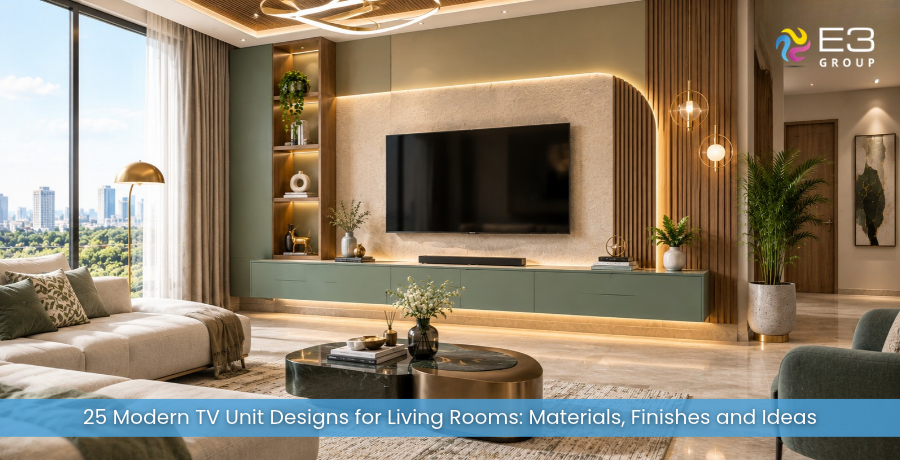
- Textured stone-look panels — ideal for feature walls behind a TV unit or bed headboard, reflecting a natural stone look.
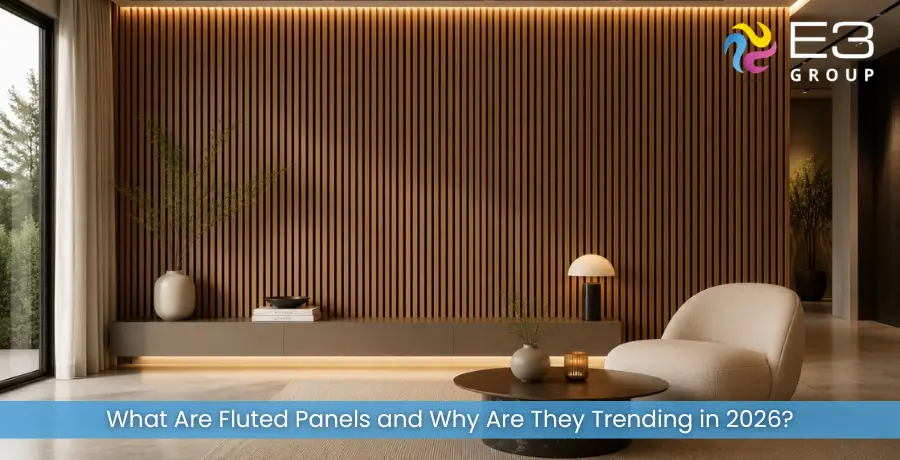
- Vertical fluted or grooved ACP panels — a current favourite in modern interiors, adding rhythm and visual movement to otherwise flat walls.
For commercial interiors like offices, showrooms, and retail spaces, ACP sheet design for wall applications also helps reinforce brand identity — panels can be colour-matched or customised to align with a company’s visual identity while staying durable under daily foot traffic.
Modern ACP Sheet Front Elevation Design: Add a Futuristic Statement to Your Home
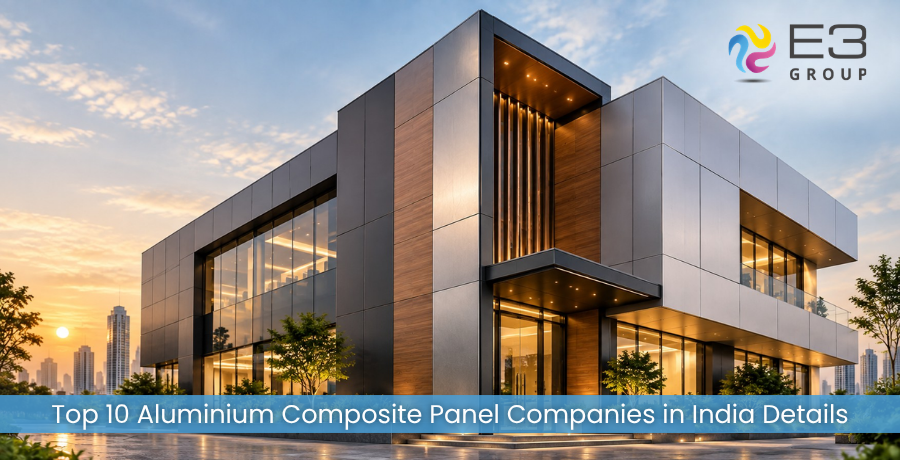
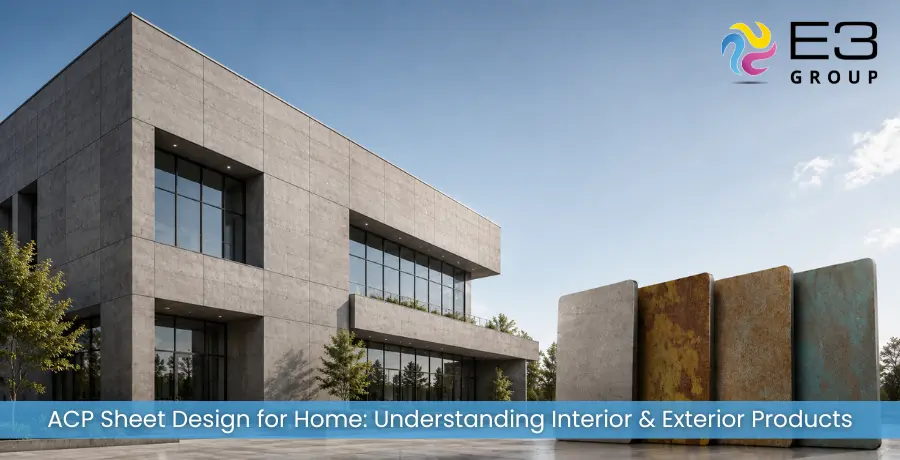
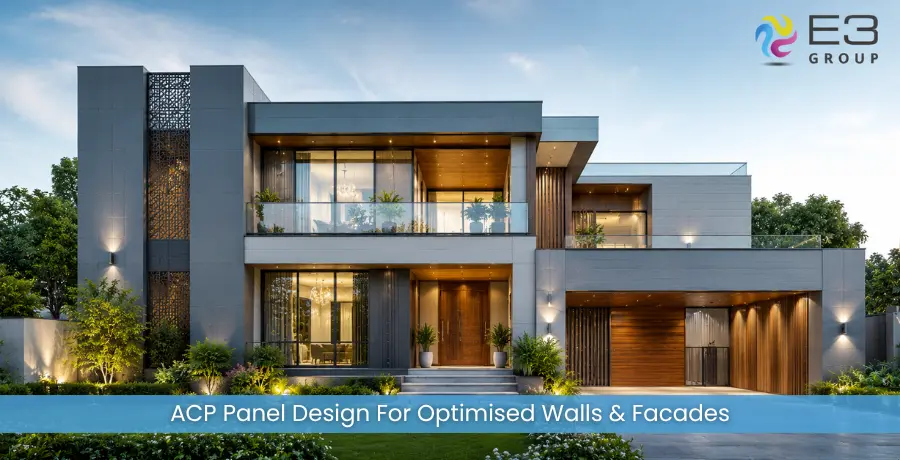
If there’s one place where ACP truly shines, it’s the building’s face. A modern ACP sheet front elevation design has become the go-to choice for homeowners who want their property to stand out on the street without going over budget on stone or glass facades.
What makes front elevation design with ACP so effective:
- Clean geometric lines — ACP panels can be precisely cut into strips, blocks, or grids, giving elevations a crisp, architect-designed look.
- Layered depth — combining flat and raised panel sections creates shadow lines that make a flat facade look three-dimensional.
- Colour blocking — contrasting ACP shades (charcoal with white, or wood-tone with matte black) are a popular way to modernise even a simple box-shaped structure.
- Weather-proof longevity — unlike paint, a well-installed ACP facade resists fading, cracking, and staining for years, keeping the elevation looking fresh with minimal upkeep.
Many architects now finish the ground floor or entrance zone in a natural stone-look ACP panel, and complement it with HPL Sheet panelling on the interior lobby wall, so the transition from outside to inside feels intentional and designed, not accidental.
Choosing the Right Partner for Your ACP Project
Good ACP panel design isn’t just about picking a nice colour from a catalogue — it depends heavily on panel quality, core density, and how well the finish holds up over years of sun and rain exposure. This is where working with an established manufacturer makes a real difference.
E3 Group manufactures India’s best ACP, HPL Sheet, MDF, edgebands, and clad panels with next-gen technologies. It delivers durable, design-forward surface solutions for homes and businesses.
Whether you’re planning a home facade, a wall accent, or a full commercial elevation, E3’s range of ACP and laminate products gives you the flexibility to design exactly the look you’re after — without compromising on durability.
Start your project: Call +91-7025170251 or email [email protected] for free samples.
Frequently Asked Questions
1. Is ACP panel design suitable for both interior and exterior use?
Yes. ACP is versatile enough for exterior facades, boundary walls, and balconies, as well as interior accent walls, kitchen backsplashes, and ceiling panelling.
2. How does ACP compare to HPL Sheet?
Take it like this — ACP is basically used for outer walls since it is built to shrug off sun, rain, and pollution without breaking a sweat. Laminate sheets, on the other hand, feel more at home indoors — furniture, cabinetry, wardrobes — anywhere you want a warmer, more tactile finish. A lot of homeowners actually use both, letting each material do what it does best while keeping the overall look tied together.
3. How long does ACP sheet design last?
ACP panels comfortably last 10–12 years, sometimes more. They hold up well against chipping, cracking, and moisture, which is exactly why they’ve become such a low-fuss choice for homeowners who don’t want to think about repainting or resealing every couple of years.
4. What’s trending in modern ACP sheet front elevation design right now?
It is all about shades and texture. Fluted textures serve well for many years, and designers are leaning into layered panel depth to make flat facades feel architecturally interesting rather than just… flat.